Zeiss, Boehringer Ingelheim, Unleash Live executives highlight region's growing role in R&D, drug discovery, industrial automation
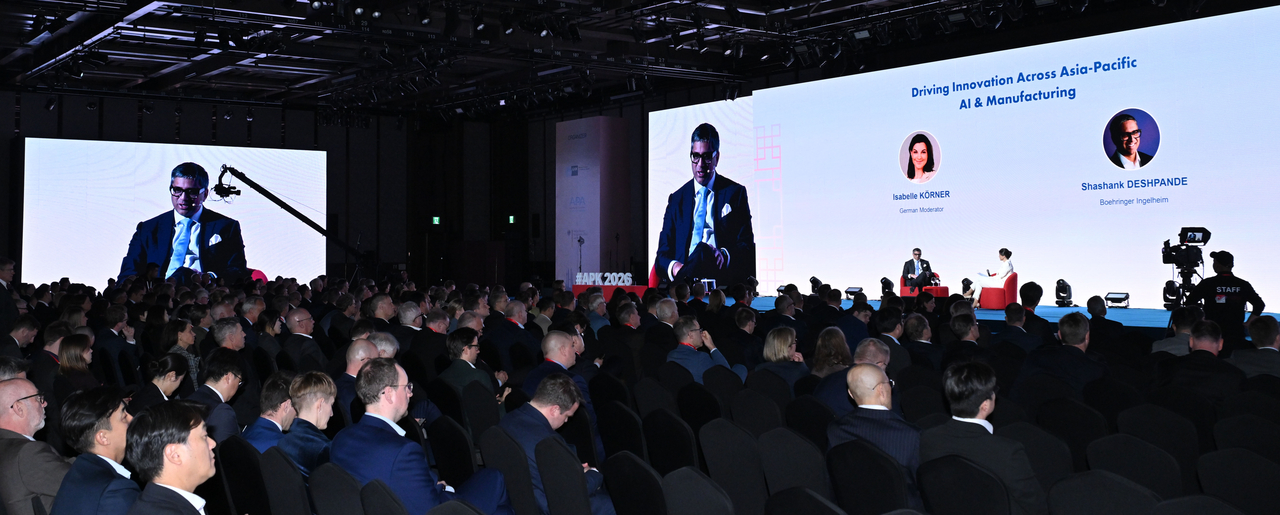
The Asia-Pacific region is swiftly becoming a center of global innovation as it moves beyond its traditional role as a manufacturing base and into a hub for artificial intelligence, data and cross-border partnerships that will reshape industries, executives from three multinational companies said Friday.
Speaking at a session titled "Driving Innovation Across Asia-Pacific: AI & Manufacturing" at APK 2026 in Seoul, Andreas Pecher, CEO of Carl Zeiss, Shashank Deshpande, CEO of Boehringer Ingelheim, and Hanno Blankenstein, co-founder and CEO of Unleash Live, pointed to the region's growing presence and influence in technology development, pharmaceutical research and industrial automation.
Pecher pointed out that the Asia-Pacific region has become more important not only as a market for the German technology group's products, but also as a place where innovations are developed in close collaboration with partners.
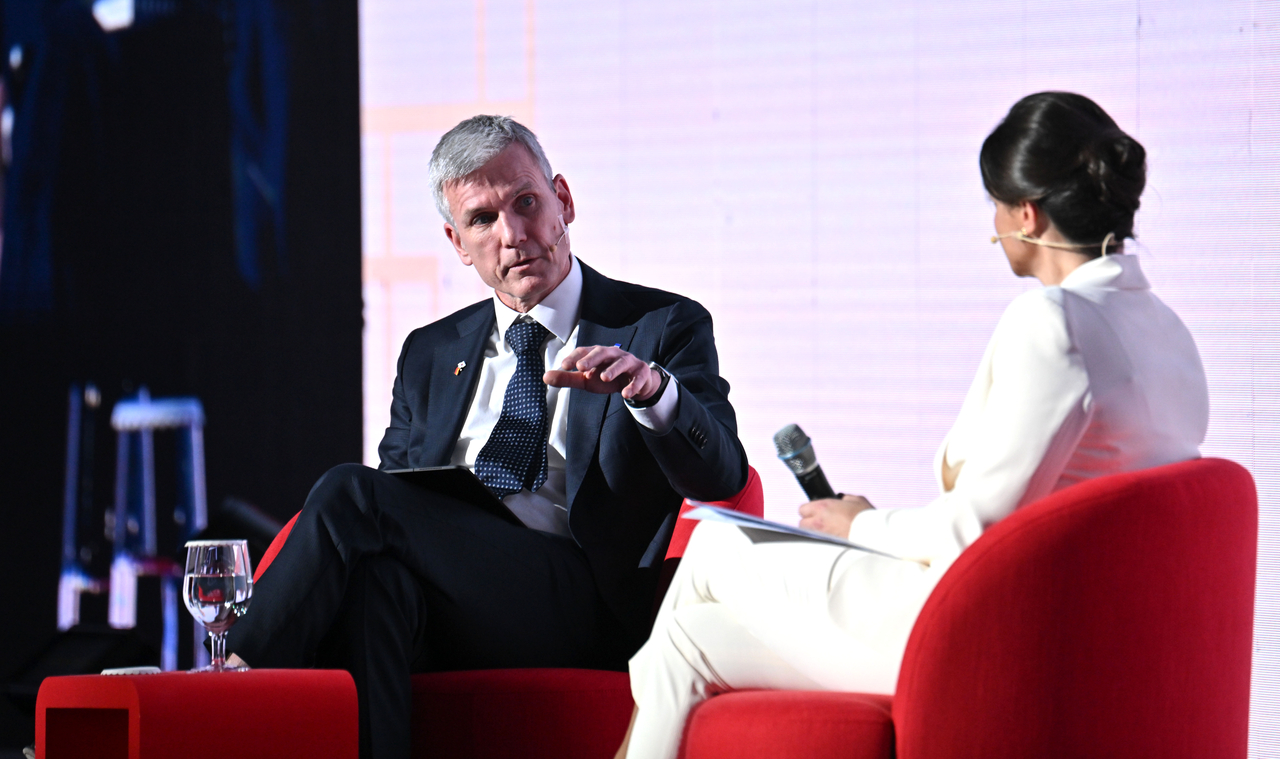
Zeiss, which operates around 40 R&D locations worldwide, has roughly a quarter of them in the Asia-Pacific region. It produces high-precision optical and optoelectronic systems used for producing semiconductors.
"Speed is one of the things I've seen here in Asia. It's a fairly pragmatic and constructive approach with industry and very fast decision-making," Pecher said, adding that European companies could learn from the region's ability to turn ideas into action.
Deshpande said the Asia-Pacific region was becoming a key contributor to pharmaceutical innovation, citing its expanding manufacturing and R&D capabilities, clinical trial infrastructure and access to patient data.
The Boehringer Ingelheim leader noted that AI could help identify promising drug candidates and patients while shortening clinical trials and reducing failure rates. Around 30 percent of large-scale Phase 3 clinical trials still fail, highlighting the potential value of better data analysis and simulation.
"This is not just an area or a region of cheap manufacturing," Deshpande said. "The Asia-Pacific region is certainly, in our eyes, an equal player in terms of innovation."
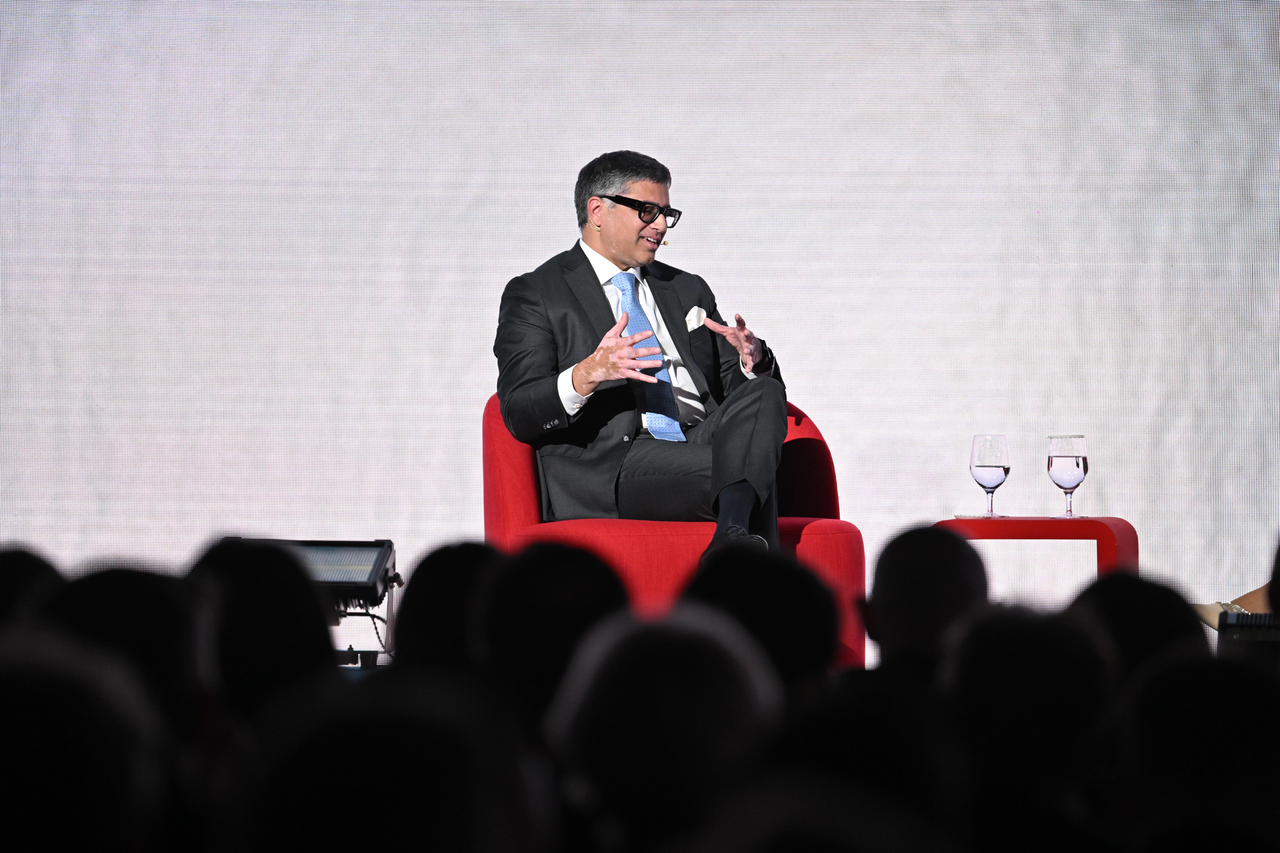
Blankenstein, meanwhile, stressed that industrial AI would require more than sophisticated software models. His Australia-based company connects robots and drones to AI systems to monitor critical infrastructure and improve operational safety and productivity.
He argued that industrial applications require a level of precision beyond what general-purpose AI models currently offer, particularly in high-risk environments such as refineries, ports and mining facilities.
"We need to be 100 percent right every time, any time, in every scene," he said.
Blankenstein called for greater collaboration among technology providers, manufacturers and robotics companies to build the data infrastructure needed for industrial AI.

hwkan@heraldcorp.com